How a Free Infrared Roof Scan Works and What It Reveals
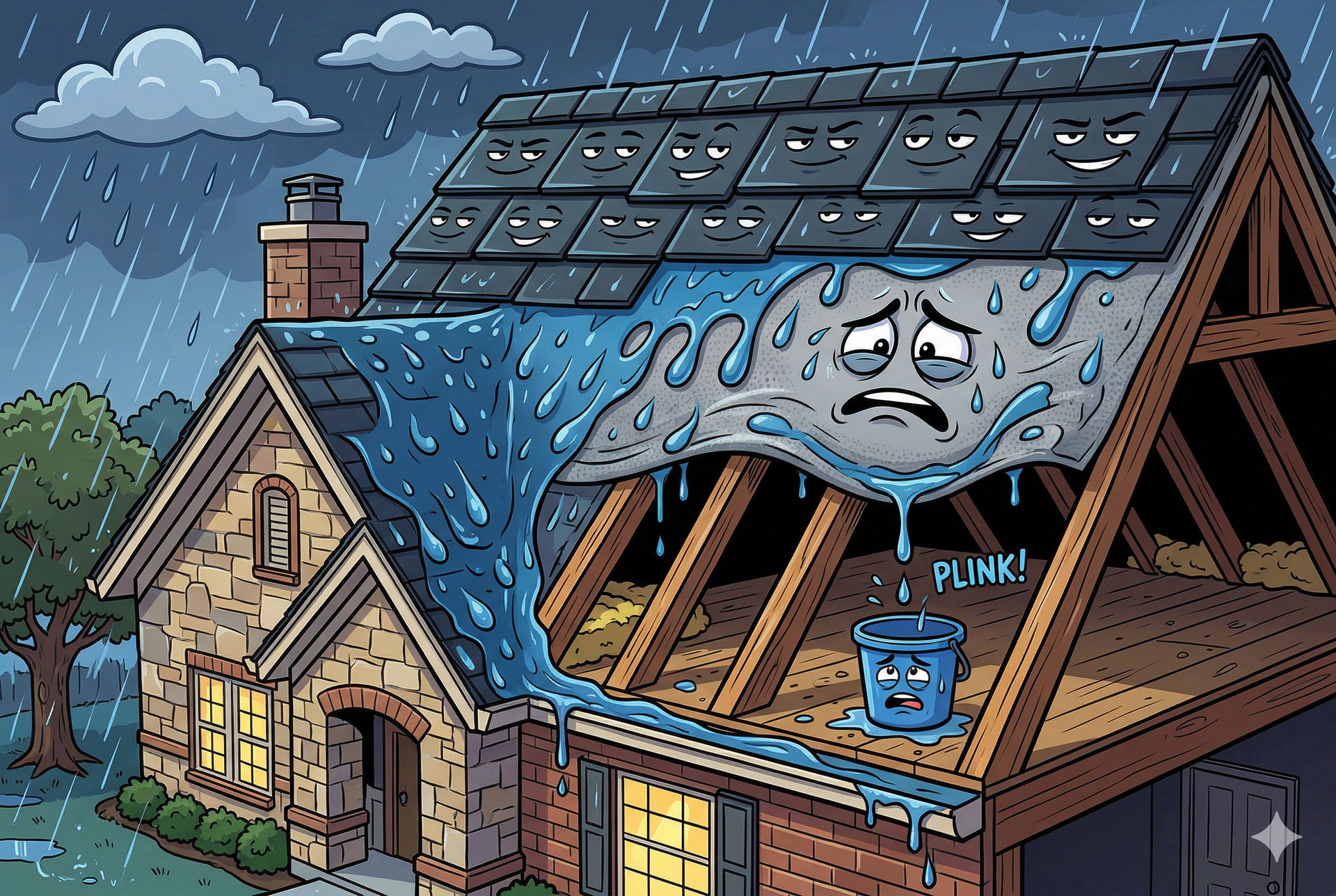
Your roof is excellent at lying to you.
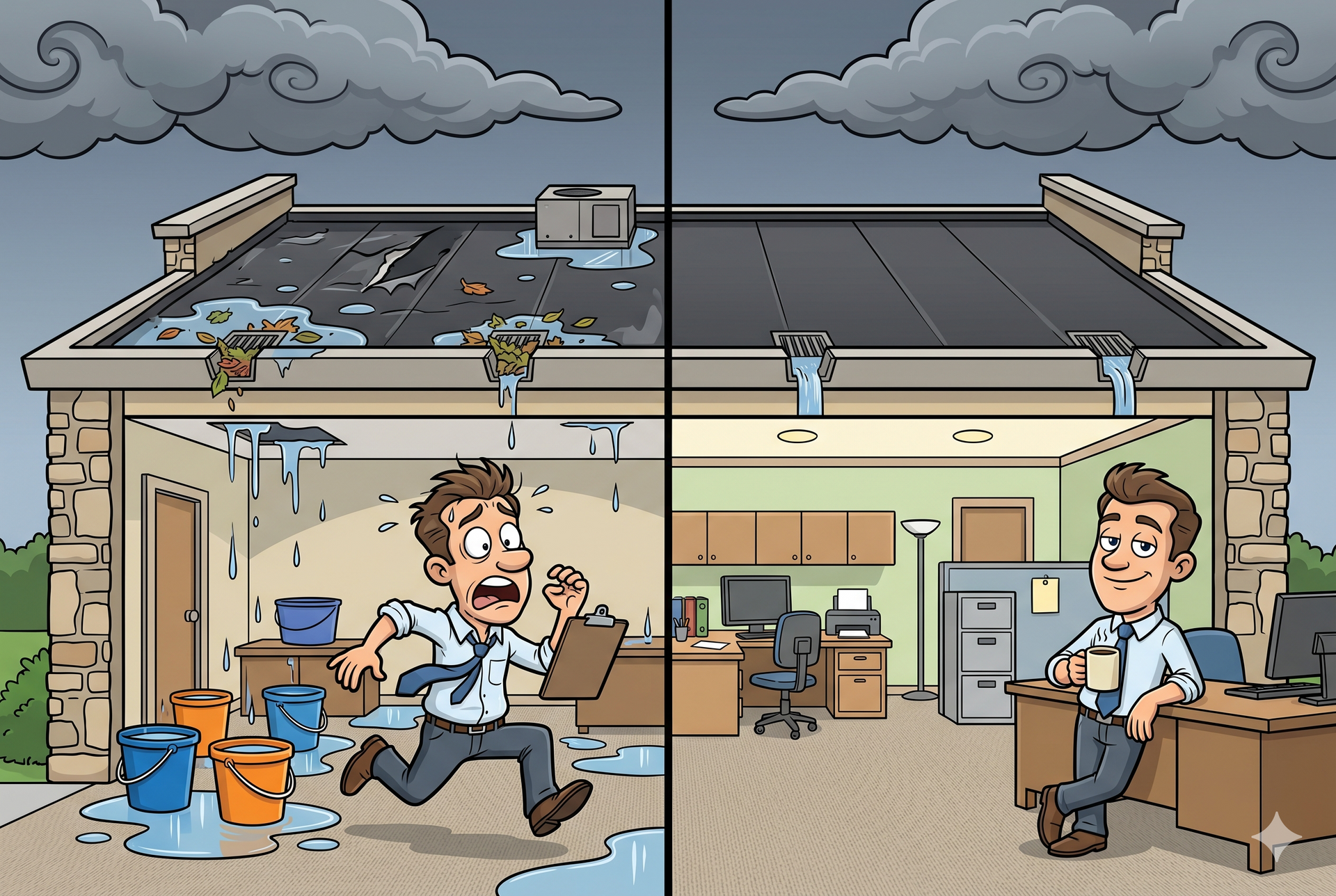
From the street, it looks calm. Confident. Maybe even smug. “Everything’s fine up here,” it says. Meanwhile, it could be hiding moisture, insulation failure, and the early stages of a leak that is quietly planning to ruin your ceiling at the worst possible time.
That’s where an infrared roof scan comes in.
At Renown Roofing & Construction, our free infrared roof scans have exposed more secrets than a group text accidentally sent to the wrong person. This is how they work, what they reveal, and why homeowners love them once they realize how much trouble they just avoided.
What an Infrared Roof Scan Actually Is
Let’s clear this up right away. An infrared roof scan is not science fiction. There are no lasers. No X ray vision. No lab coats.
It’s a thermal camera that reads temperature differences across your roof and attic. Dry materials cool and heat evenly. Wet materials do not. Moisture holds heat longer, which makes damaged areas show up clearly on the scan.
Think of it as your roof wearing a heat map that says, “Please fix me before I get dramatic.”
Why Water Is So Good at Hiding
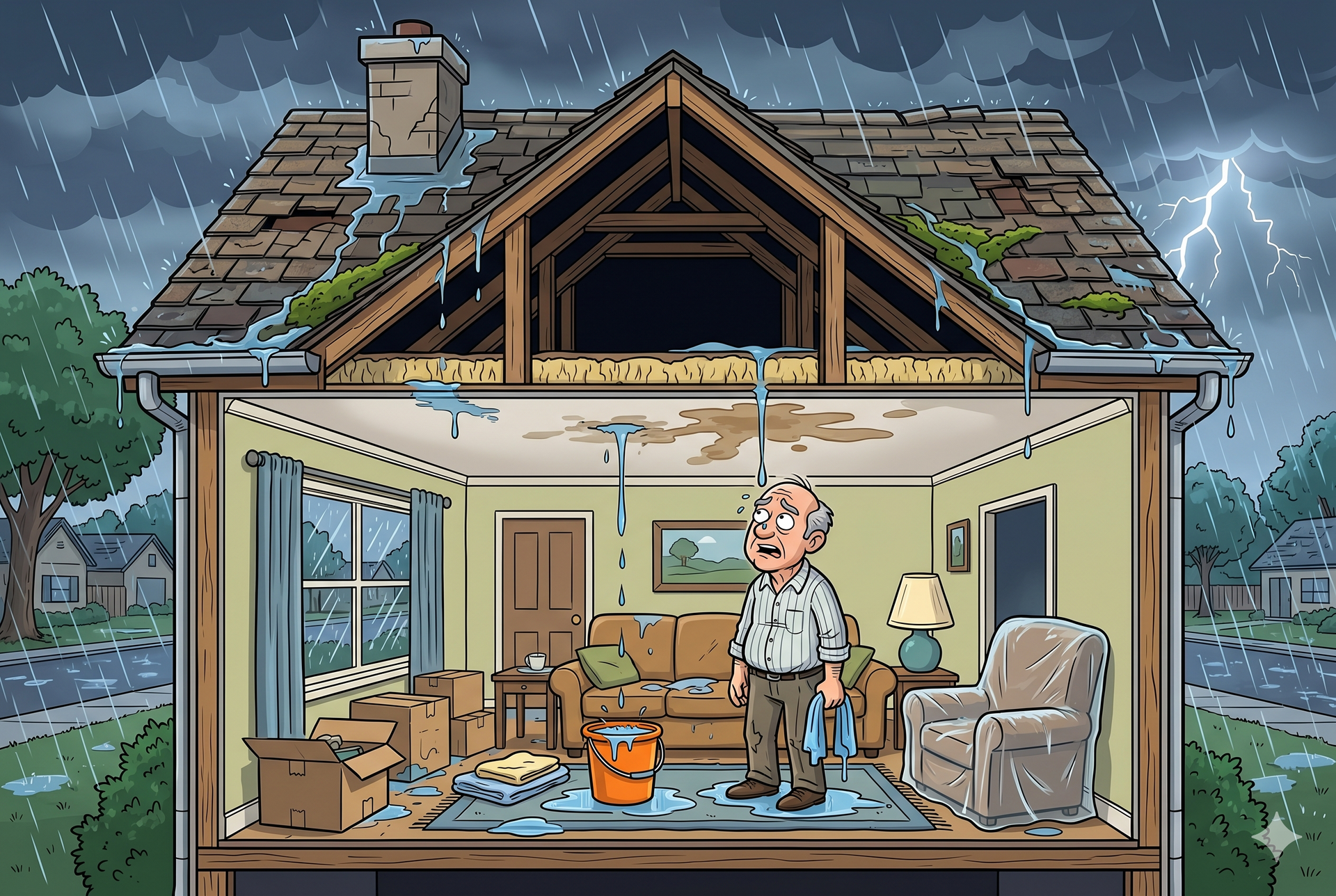
Water never takes the straight path. It sneaks sideways. It soaks into insulation. It settles into decking. It hides like it’s playing hide and seek and takes the game way too seriously.
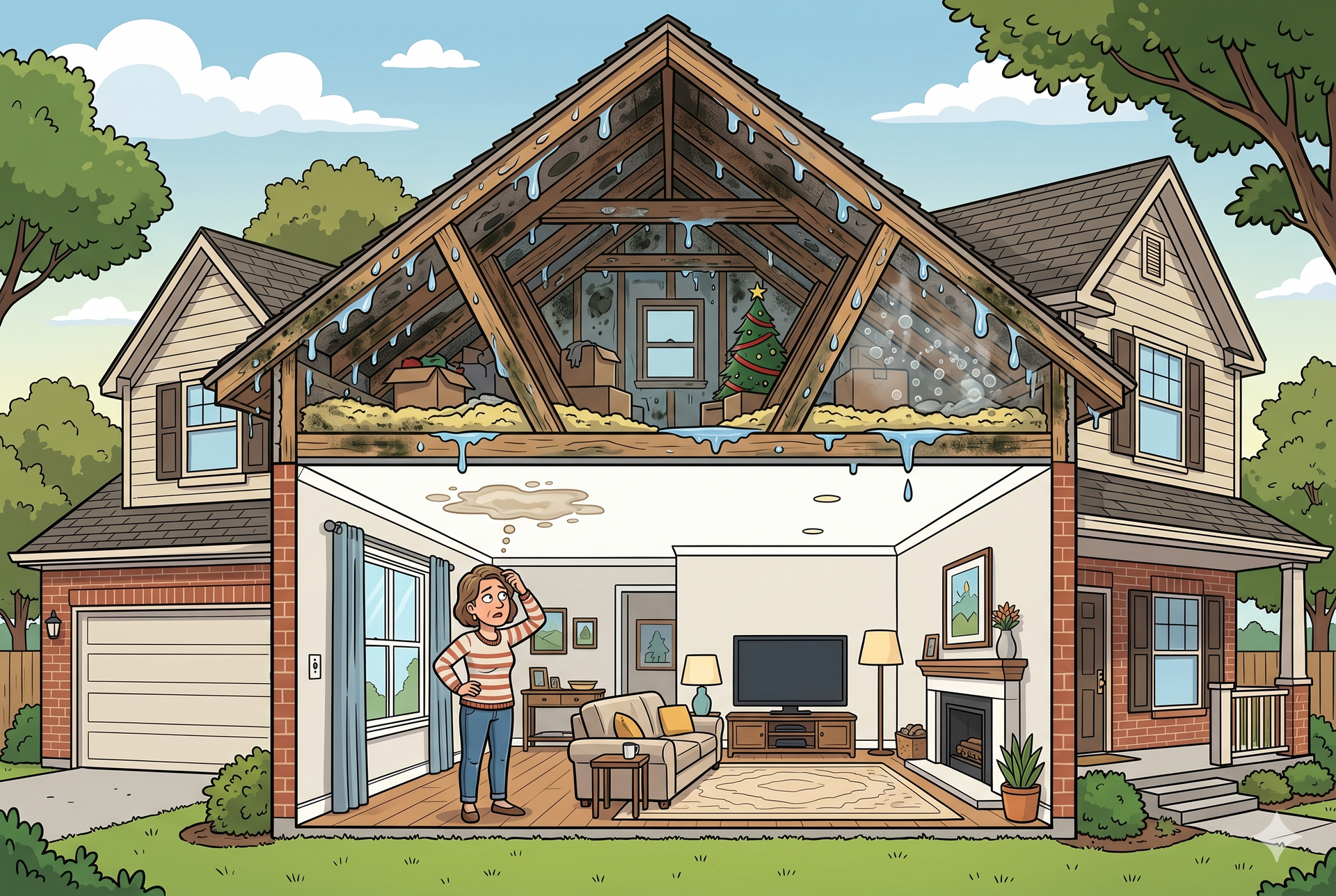
By the time you see a ceiling stain, the damage has already been hanging out for a while. Insulation is wet. Wood may be rotting. Mold may already be planning a long term stay.
Infrared scans catch moisture early. Before stains. Before smells. Before drywall repair becomes your weekend project.
How the Infrared Scan Process Works
The process is quick, clean, and oddly satisfying.
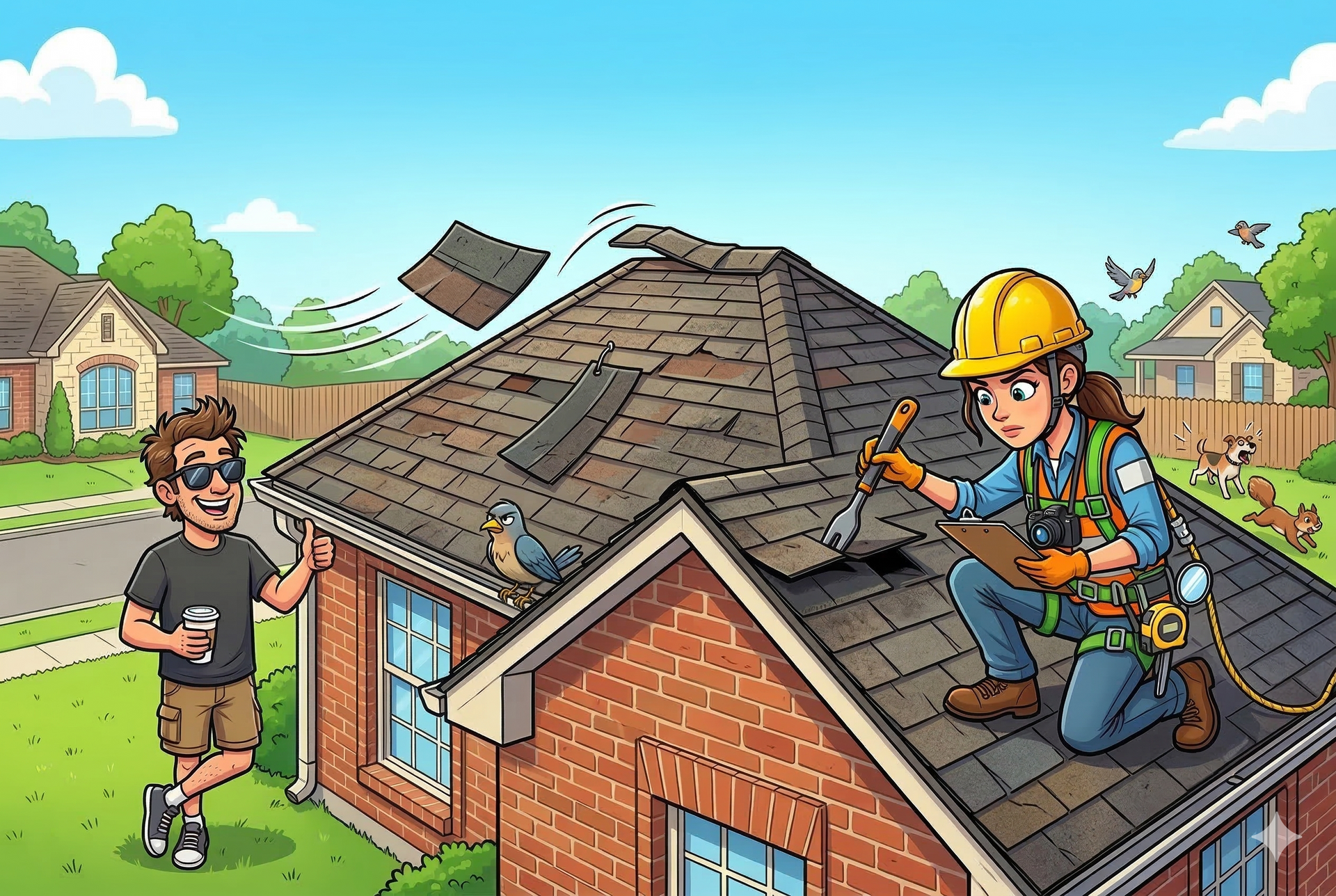
First, we scan your roof and attic with a thermal camera. The camera highlights temperature differences across the surface. Areas that stay warmer longer than they should immediately stand out.
Next, our inspector verifies those areas with a physical inspection. This confirms whether the issue is moisture, insulation loss, ventilation problems, or material failure.
Finally, we show you exactly what we found. Real images. Clear explanations. No scare tactics. No mystery language. Just the truth.
What Infrared Roof Scans Reveal
This is where roofs usually stop pretending.
Hidden Leaks
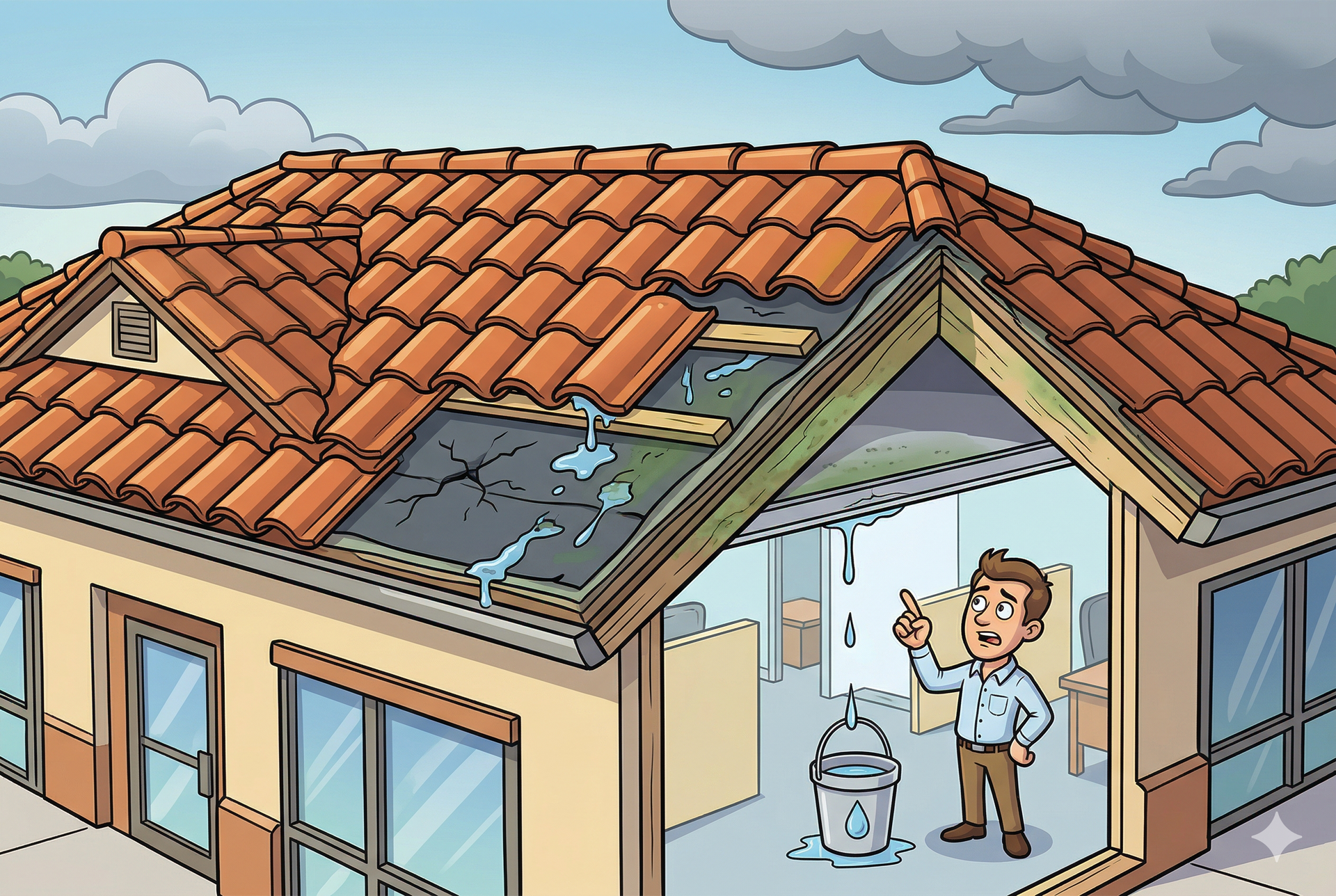
Small leaks often do not show visible damage right away. Infrared scans detect moisture beneath shingles and underlayment before water reaches your ceiling.
Wet or Failing Insulation
Insulation does not work when it is wet. Infrared imaging shows hot or cold pockets that explain uneven temperatures and rising energy bills.
Ventilation Problems
Poor airflow traps heat. Infrared scans highlight overheated attic zones that point directly to ventilation issues.
Early Decking Damage
Moisture trapped in roof decking shows up clearly on thermal scans. Catching this early can prevent widespread rot and structural repairs.
Old Repairs That Did Not Age Well
Yes, this happens a lot. Infrared scans often reveal past repairs that looked fine but are quietly failing again.
Why Infrared Scans Are Especially Useful in Texas
Texas roofs live on hard mode.
Extreme heat. Sudden storms. Hail. Long summers that feel personal. These conditions make moisture and heat patterns easier to detect with infrared imaging.
The same weather that damages roofs also makes hidden problems easier to spot. Which is great news for homeowners who would rather fix small issues than pay for big ones later.
How a Free Infrared Scan Saves You Money
This is not about fancy gadgets. It’s about timing.
Catching a leak early can mean a small repair instead of drywall replacement. Finding wet insulation early can prevent mold remediation. Identifying ventilation problems early can add years to your roof’s lifespan.
Most expensive roof problems start as small, boring issues that were ignored. Infrared scans stop that process early.
Why DFW Homeowners Trust Renown Roofing
We use infrared scans as a diagnostic tool, not a sales trick.
Experienced Inspectors Who Know What They’re Looking At
Thermal images only help if the person reading them understands roofing systems. Our inspectors do.
Clear Explanations Without Pressure
We explain what we see, why it matters, and what actually needs attention. No drama.
Documentation That Helps With Insurance
Infrared images provide strong evidence when filing claims and explaining damage.
Local Experience With Texas Roofs
We understand how Texas weather affects thermal readings and roof behavior.
A Reputation Built on Trust
With an A+ BBB rating and over 1,200 five star reviews, homeowners trust us to be honest, even when the news is boring. Or good.
Your Roof Is Hiding Something
Most roofs do not fail suddenly. They fail quietly. Slowly. Politely. Until they don’t.
A free infrared roof scan removes the guesswork and replaces it with clarity.
Ready to See What Your Roof Is Really Doing?
Book an inspection.
Refer a friend.
Call 972-782-5489 or visit www.RenownConstruction.com
to schedule your free roof inspection today.
Frequently Asked Questions (FAQ)
Is an infrared roof scan really free?
Yes. No catch. No obligation. Just information.
Does infrared scanning damage my roof?
No. It is completely non invasive.
Can infrared scans find every roof problem?
They detect moisture, heat buildup, and insulation issues. Physical inspections confirm the cause.
Do infrared scans work on all roof types?
Yes. Asphalt, metal, tile, and commercial systems all benefit.
Is infrared scanning accurate?
Very, when interpreted by trained inspectors.
Can infrared scans help with insurance claims?
Yes. Thermal images often strengthen documentation.
How long does the scan take?
Usually under an hour.
Do I need to be home?
It helps, but it is not always required.
Will you show me the images?
Yes. We explain everything clearly.
What happens after the scan?
You get honest recommendations. No pressure. No surprises.