The Most Common Causes of Roof Leaks in Older Homes
Older homes have character.
They have charm. History. Personality.
They also have opinions.
Doors creak. Floors squeak. Pipes make noises no one fully understands.
And sometimes… the roof decides it’s time to contribute.
At Renown Roofing & Construction, we inspect older homes across Flower Mound and the DFW area all the time. And one thing we’ve learned is this:
Roof leaks in older homes rarely happen “all of a sudden.”
They usually start small, stay hidden, and quietly wait for the worst possible moment to introduce themselves.
Usually during a storm. Or a holiday. Or when guests are over.
Let’s break down the most common reasons older homes develop roof leaks, how to spot them early, and what you can do before a small drip becomes a full-blown ceiling event.
Why Older Homes Leak More Often
Roofing systems are built to last. But they are not built to last forever.
Over time, roofing materials deal with:
Extreme Texas heat
UV exposure
Strong wind
Heavy rain
Seasonal expansion and contraction
After years of this, materials weaken.
And once one part of the system starts failing, water usually finds it.
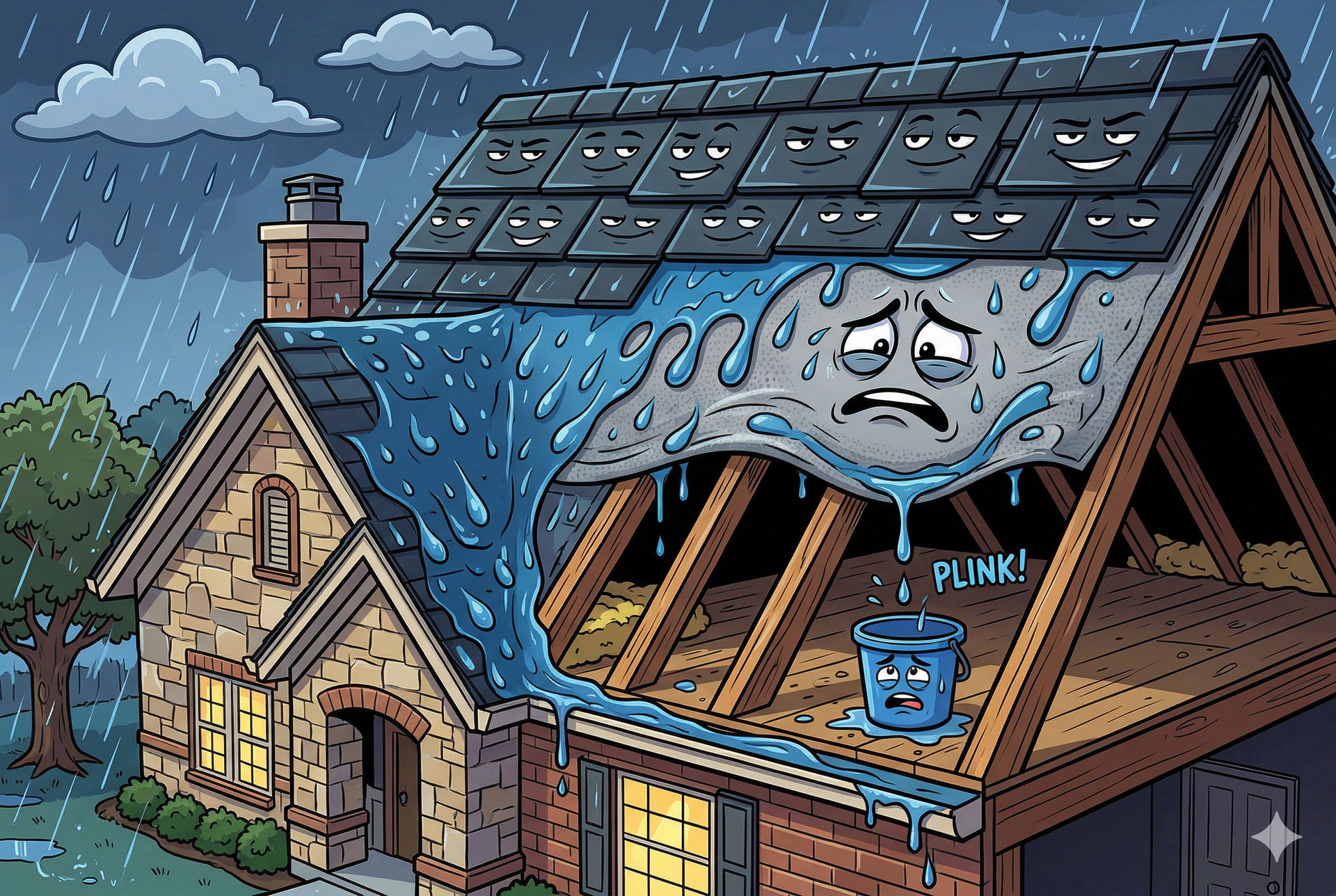
Water is basically nature’s private investigator. It always finds the weak spot.
The Most Common Causes of Roof Leaks
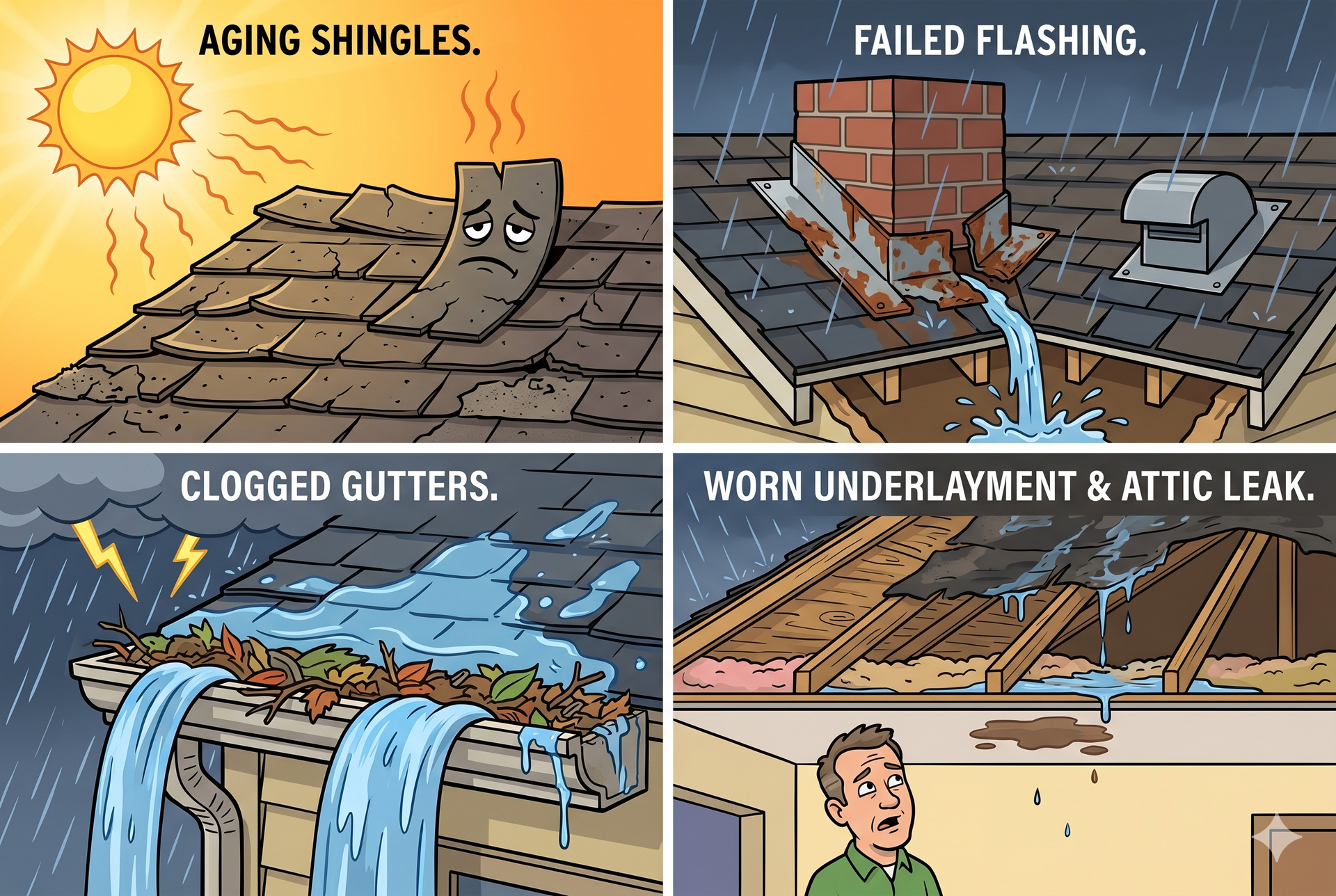
Aging or Damaged Shingles
This is the big one.
Shingles protect your roof from direct weather exposure. But over time, older shingles become:
- Brittle
- Curled
- Cracked
- Loose
Once shingles lose their seal or begin cracking, water can slip underneath and reach the layers below.
Older shingles don’t always fail dramatically. Sometimes they just quietly stop doing their job.
Failing Flashing Around Roof Penetrations
Flashing is the metal material installed around:
- Chimneys
- Vents
- Skylights
- Roof edges
Its job is to keep water out of vulnerable joints.
In older homes, flashing can:
- Rust
- Separate
- Warp
- Crack
Once flashing fails, leaks often start around these areas.
If leaks had favorite places, flashing would be on the list.
Worn Out Underlayment
Most homeowners never think about underlayment.
That’s normal.
It sits beneath your shingles and acts as a secondary waterproof barrier.
But after years of heat, moisture, and aging, underlayment can dry out, crack, or tear.
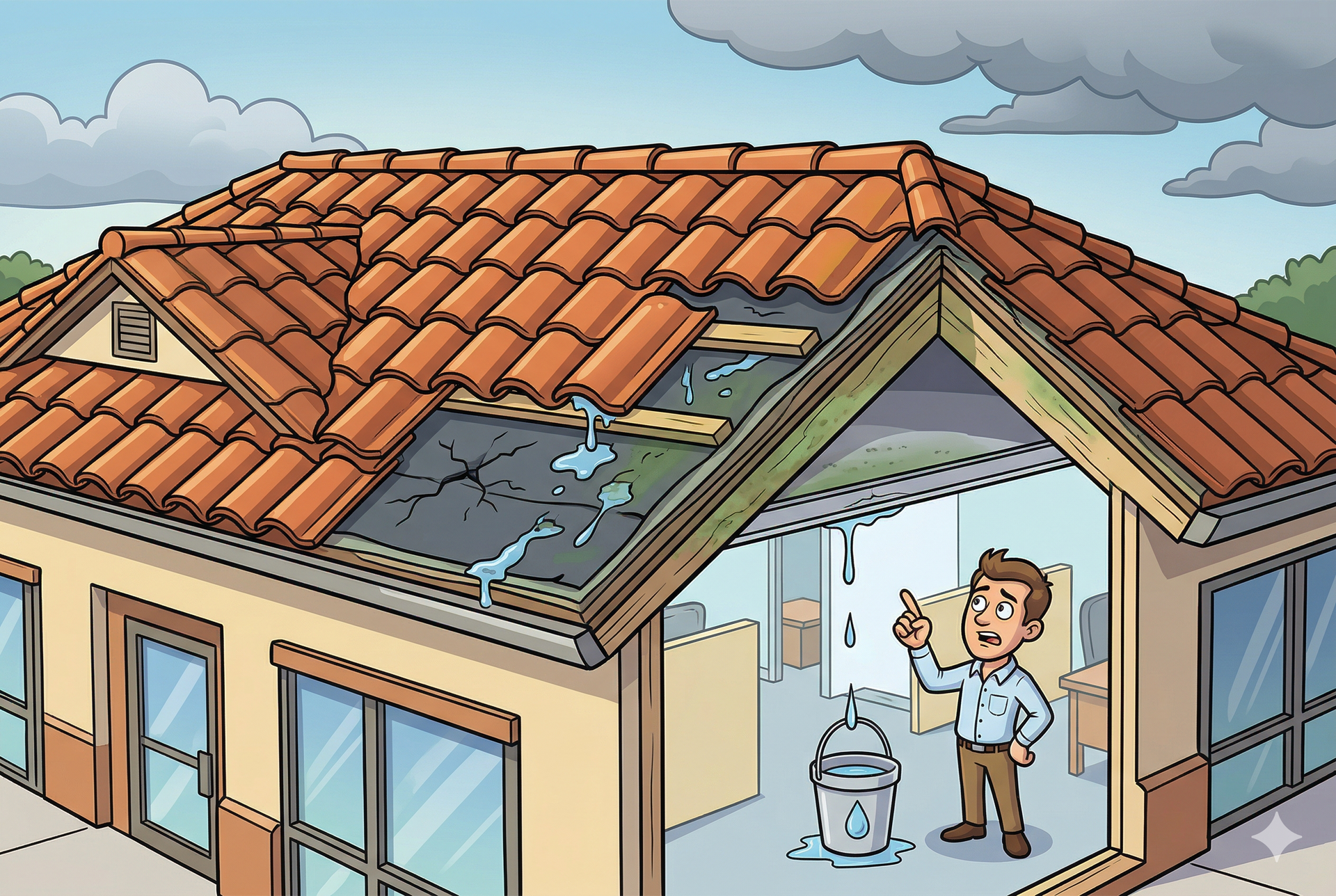
At that point, even small roof damage can lead to leaks.
The shingles may still look decent. The layer underneath might be having a completely different experience.
Roof Valleys Collecting Water
Roof valleys are where two roof slopes meet.
They naturally collect and channel large amounts of rainwater.
If the materials in these areas weaken, crack, or shift, leaks often follow.
Valleys are like highways for water. If something goes wrong there, water moves fast.
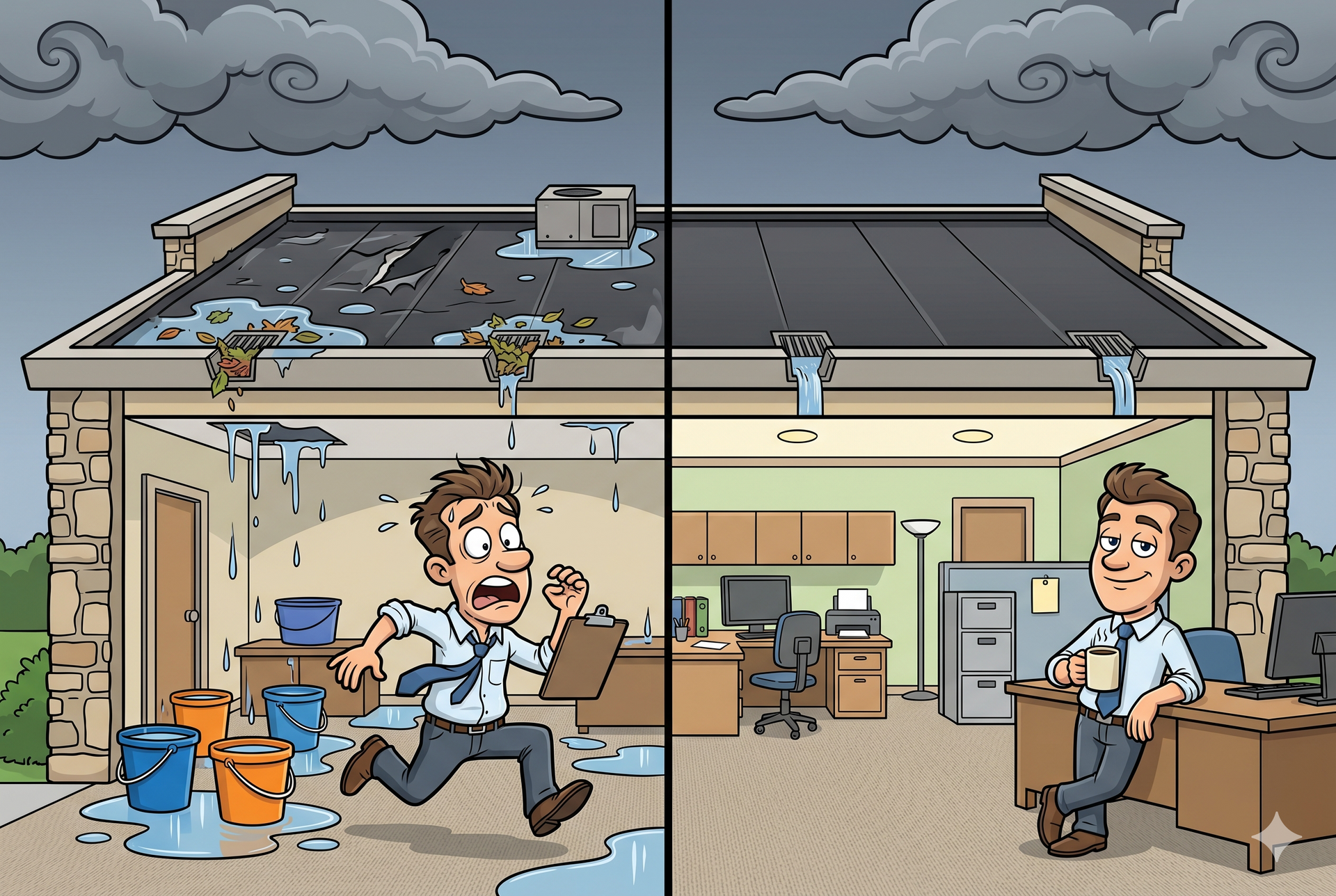
Clogged Gutters and Poor Drainage
Gutters may not seem like a roofing issue.
They absolutely are.
When gutters clog with:
- Leaves
- Dirt
- Debris
Water backs up onto the roof and can work its way under shingles or behind fascia boards.
Sometimes the leak is not from the roof. It’s from the roof’s bad drainage habits.
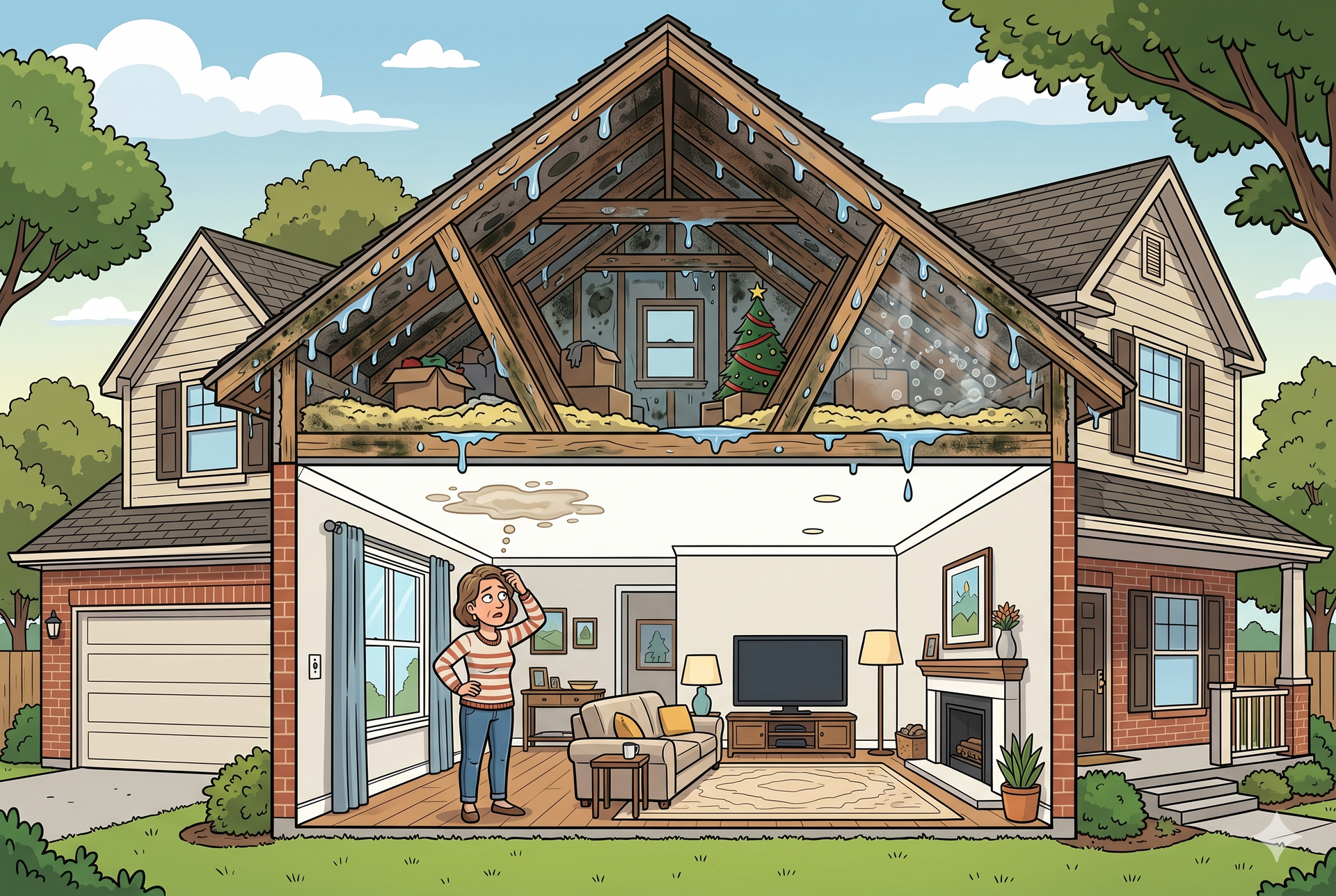
Poor Attic Ventilation
Older homes often have outdated ventilation systems.
Without proper airflow, heat and moisture build up in the attic.
That trapped moisture can:
- Weaken wood
- Damage underlayment
- Cause mold
- Shorten roof lifespan
Sometimes the leak starts from inside the system, not outside.
Sneaky, right?
Hidden Storm Damage
Texas storms don’t always leave obvious evidence.
- Hail can bruise shingles.
- Wind can lift edges.
- Debris can create tiny punctures.
Months later, those small issues become leaks.
Many homeowners think, “The storm was months ago.”
The roof remembers.
Warning Signs You May Already Have a Leak
Older roofs usually leave clues before major damage happens.
Watch for:
- Ceiling stains
- Musty smells
- Peeling paint
- Warped drywall
- Sudden mold growth
- Higher energy bills
If your home feels “off,” your roof may already be involved.
Why Flower Mound Homes Need Extra Attention
Older homes in Flower Mound and across DFW face unique challenges.
Years of:
- Texas sun
- Wind events
- Hailstorms
- Humidity changes
All take a toll.
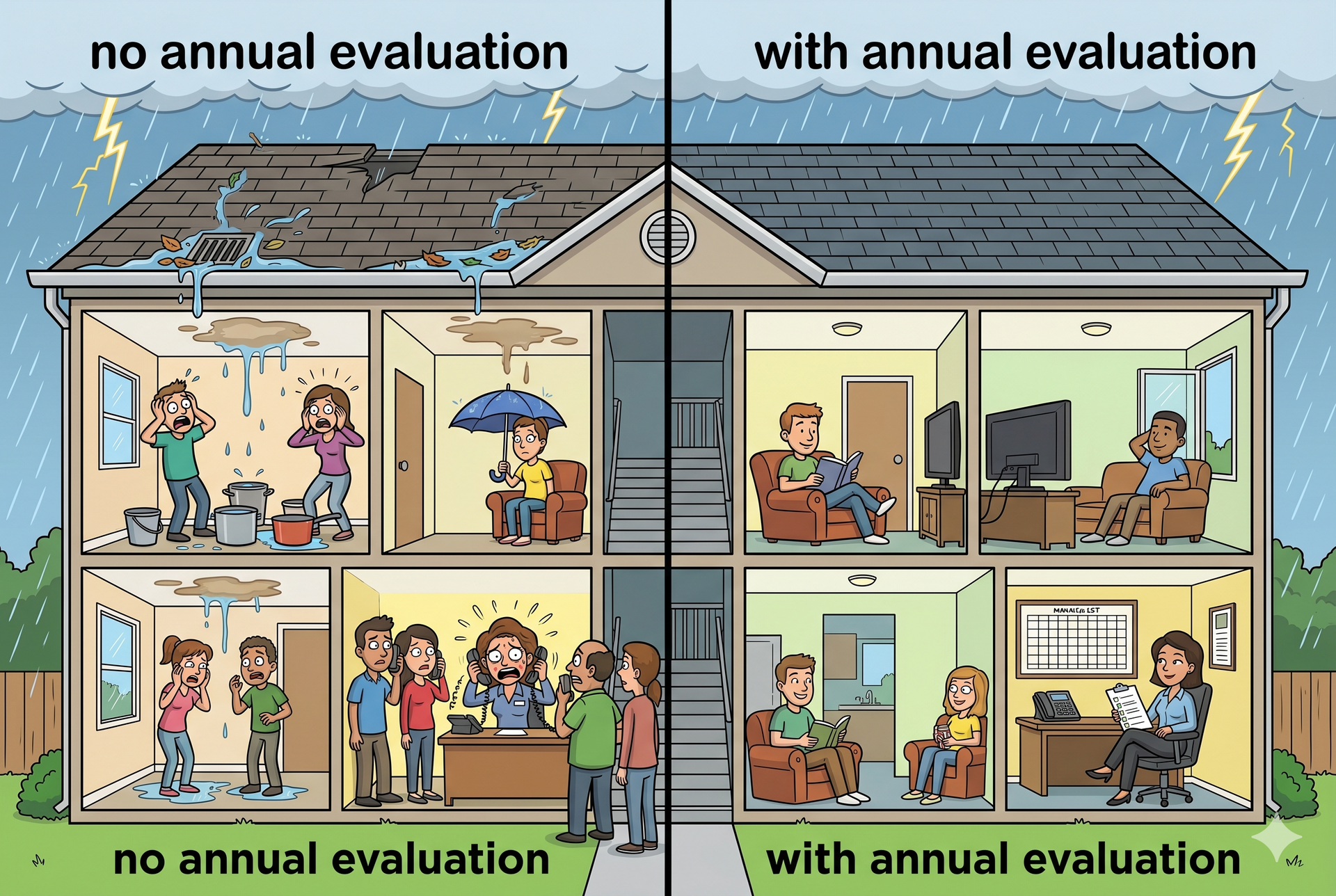
Even a well-built older home benefits from regular roof evaluations.
Because age itself isn’t the problem.
Unnoticed damage is.
How Renown Roofing Finds Hidden Leak Sources
Leaks don’t always appear where they start.
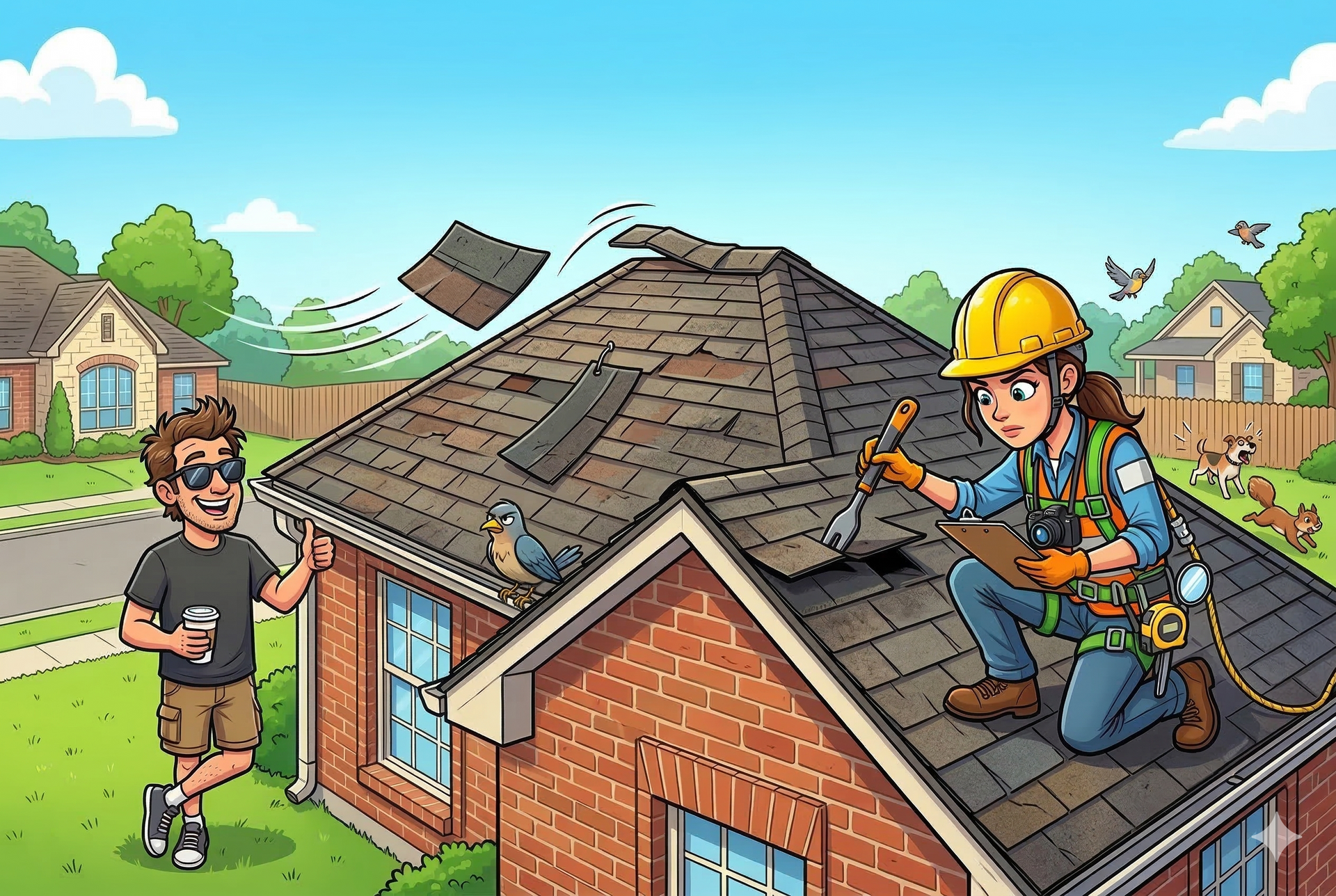
That’s why our inspections go beyond surface level.
We inspect:
- Shingles
- Flashing
- Underlayment
- Roof valleys
- Attic ventilation
- Drainage systems
We also use advanced tools like infrared technology to identify hidden moisture before it becomes visible damage.
No guessing. No “we think it’s over there.”
We find it.
Why Homeowners Trust Renown Roofing
- Certified inspectors
- Advanced leak detection technology
- Premium repair materials
- A+ BBB rating
- Over 1,200 five star reviews
We know older homes. And we know how to protect them.
Your Roof Should Not Be the Most Dramatic Part of Your House
Older homes are supposed to have character.
Not ceiling stains.
If your roof is showing signs of age, now is the time to act.
Book an inspection.
Refer a colleague.
Call
972-782-5489 or visit
www.RenownConstruction.comto schedule your free roof inspection today.
Frequently Asked Questions (FAQ)
Are roof leaks more common in older homes
Yes. Aging materials and years of weather exposure increase the risk.
Can a roof leak start without visible damage
Absolutely. Many leaks begin beneath the surface.
What is the most common leak source
Damaged shingles and failing flashing are very common.
Can clogged gutters cause roof leaks
Yes. Poor drainage can force water under roofing materials.
Does attic ventilation affect leaks
Yes. Moisture buildup can weaken the roofing system from inside.
How often should older roofs be inspected
At least once per year and after major storms.
Can a small leak become a major repair
Very quickly.
Do leaks always appear directly below the damage
No. Water often travels before becoming visible.
Can hail cause hidden leaks
Yes. Even minor storm damage can create leak points.
How do I know if my roof needs repair or replacement
A professional inspection can determine the best option.