How to Know if Your Commercial Roof Needs Emergency Repairs
There are two types of roofing issues in commercial buildings.
The first type is annoying.
The second type shuts down operations.
Emergency roof problems fall into the second category.
The challenge is that most property owners and facility managers don’t realize it’s an emergency until tenants are calling, water is dripping into buckets, and someone is asking if this is “covered by insurance.”
At Renown Roofing & Construction, we respond to emergency calls across Flower Mound and the DFW area regularly. And almost every time, the warning signs were there before things escalated.
Let’s go through how to recognize a real roof emergency before it turns into a business disruption.
What Counts as a Commercial Roof Emergency
Not every roofing issue requires immediate action.
A small membrane blister? Not urgent.
Minor wear and tear? Still manageable.
But when your roof stops doing its main job, keeping water out, it becomes an emergency.
If your building is exposed to water or structural risk, you’re no longer in “maintenance mode.” You’re in “damage control.”
The Most Common Emergency Warning Signs
These are the signs where you stop planning and start acting.
Active Leaks Inside the Building
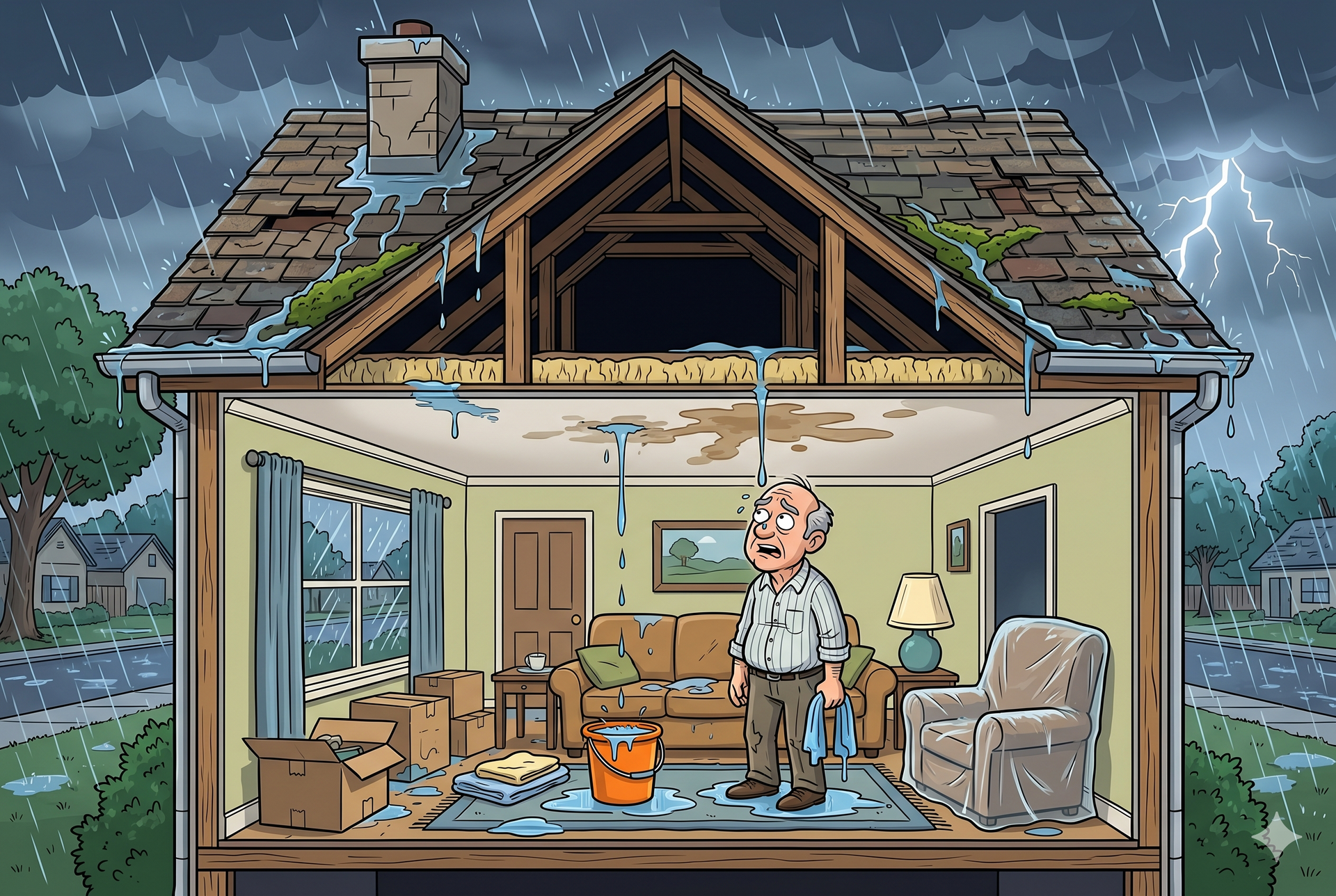
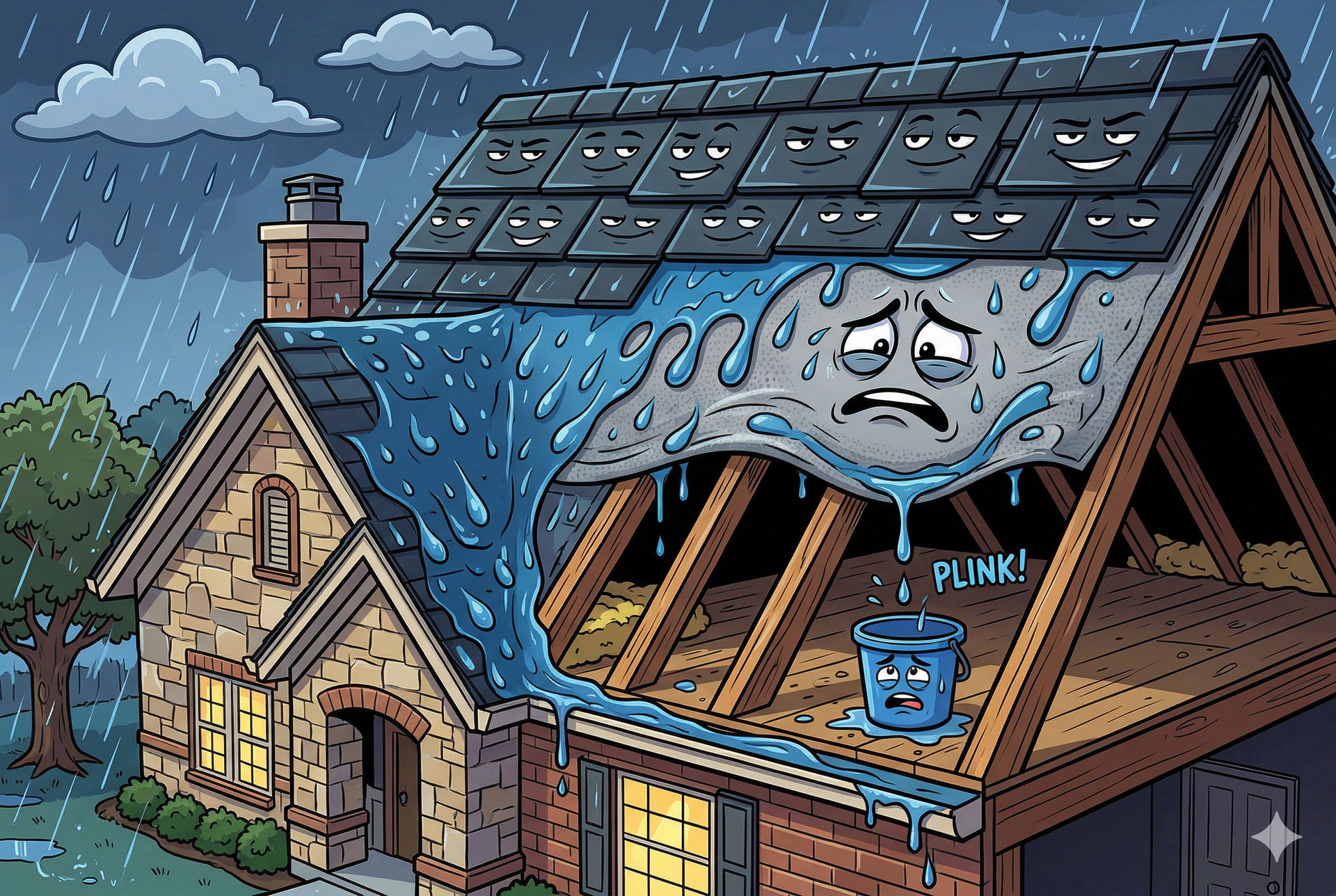
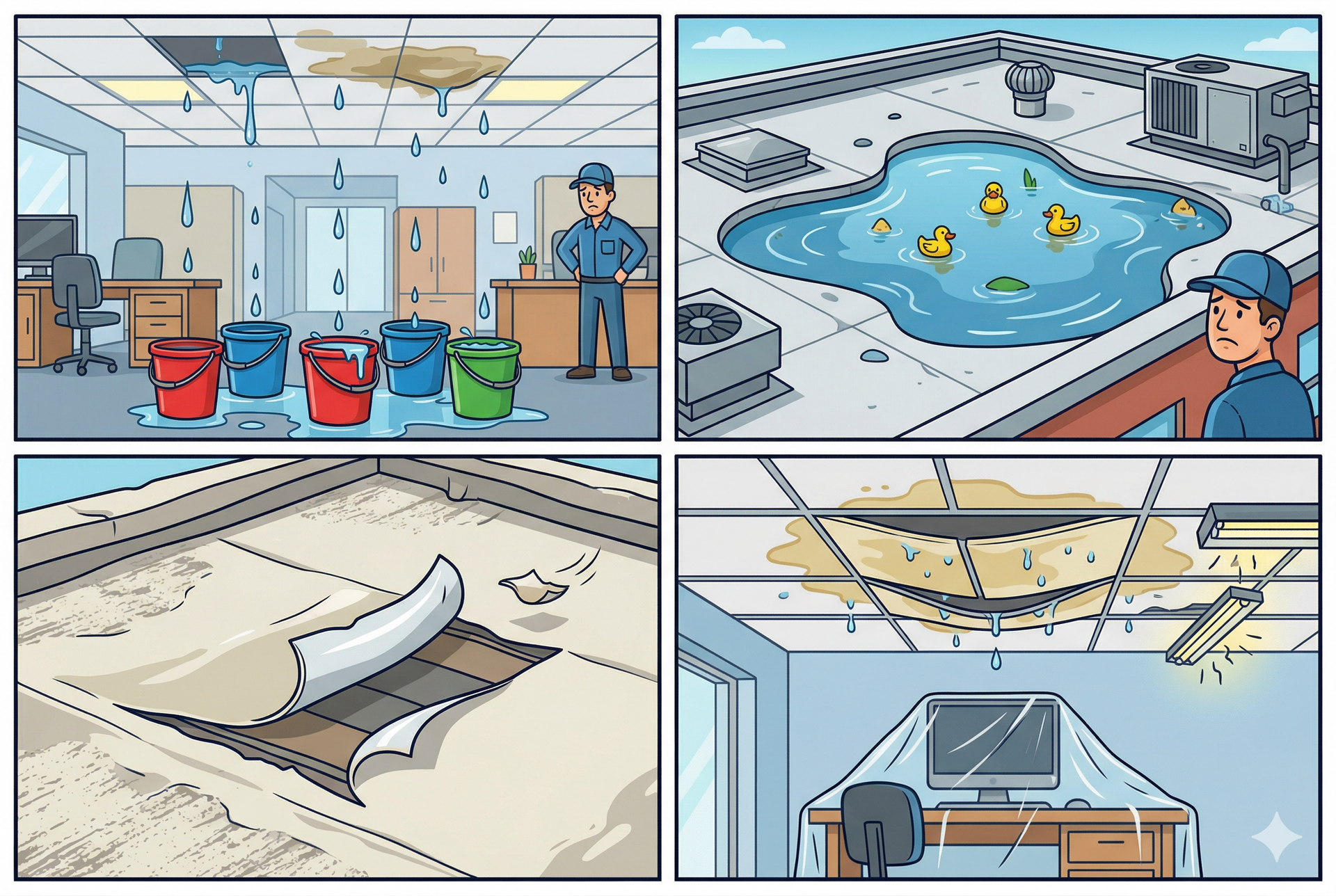
If water is dripping, pooling, or running inside your commercial space, it is an emergency.
Leaks can damage:
- Ceilings
- Walls
- Electrical systems
- Inventory
- Equipment
Water doesn’t stay put. It travels, and it usually travels toward expensive things.
Tenant Complaints About Water or Moisture
Tenant Complaints About Water or Moisture
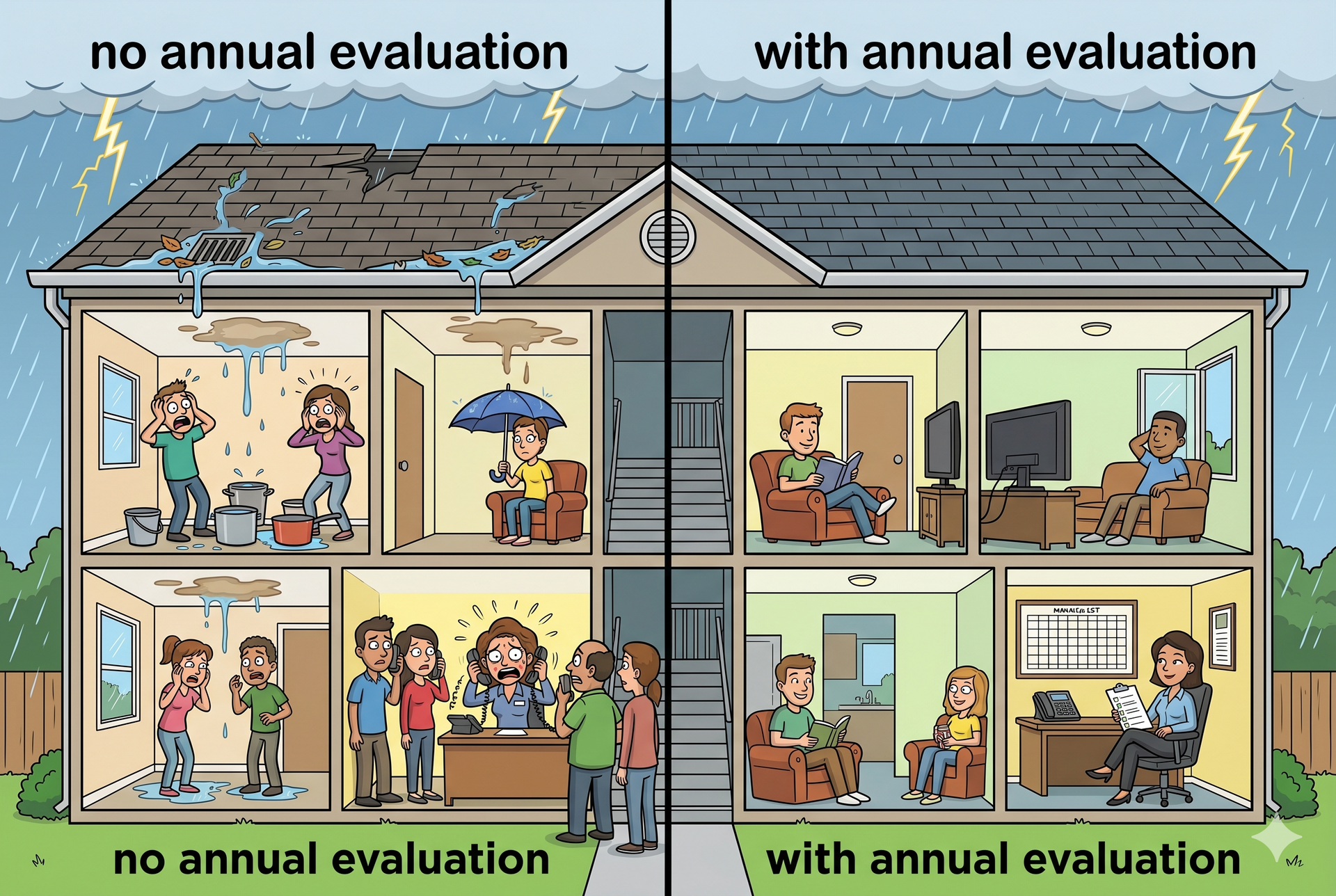
If multiple tenants are reporting:
- Leaks
- Damp ceilings
- Musty smells
The issue is already bigger than one isolated spot.
Tenant complaints are often the first real alert that something is wrong on the roof.
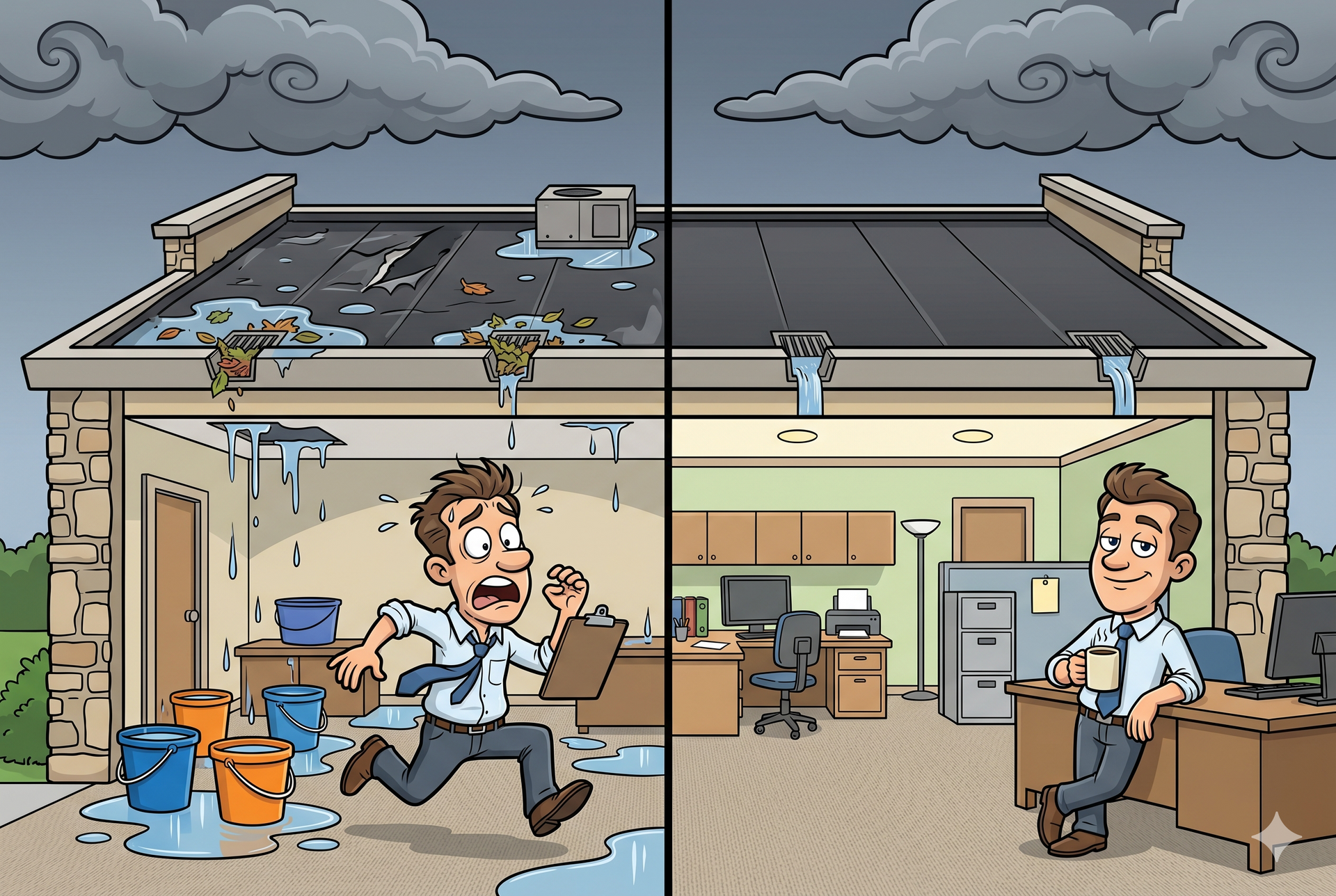
Ponding Water That Won’t Drain
Flat commercial roofs rely on proper drainage.
If water is sitting on your roof for more than 48 hours after rain, it is a problem.
Ponding water adds weight, weakens the membrane, and increases the risk of leaks.
Water should leave your roof. Not settle in.
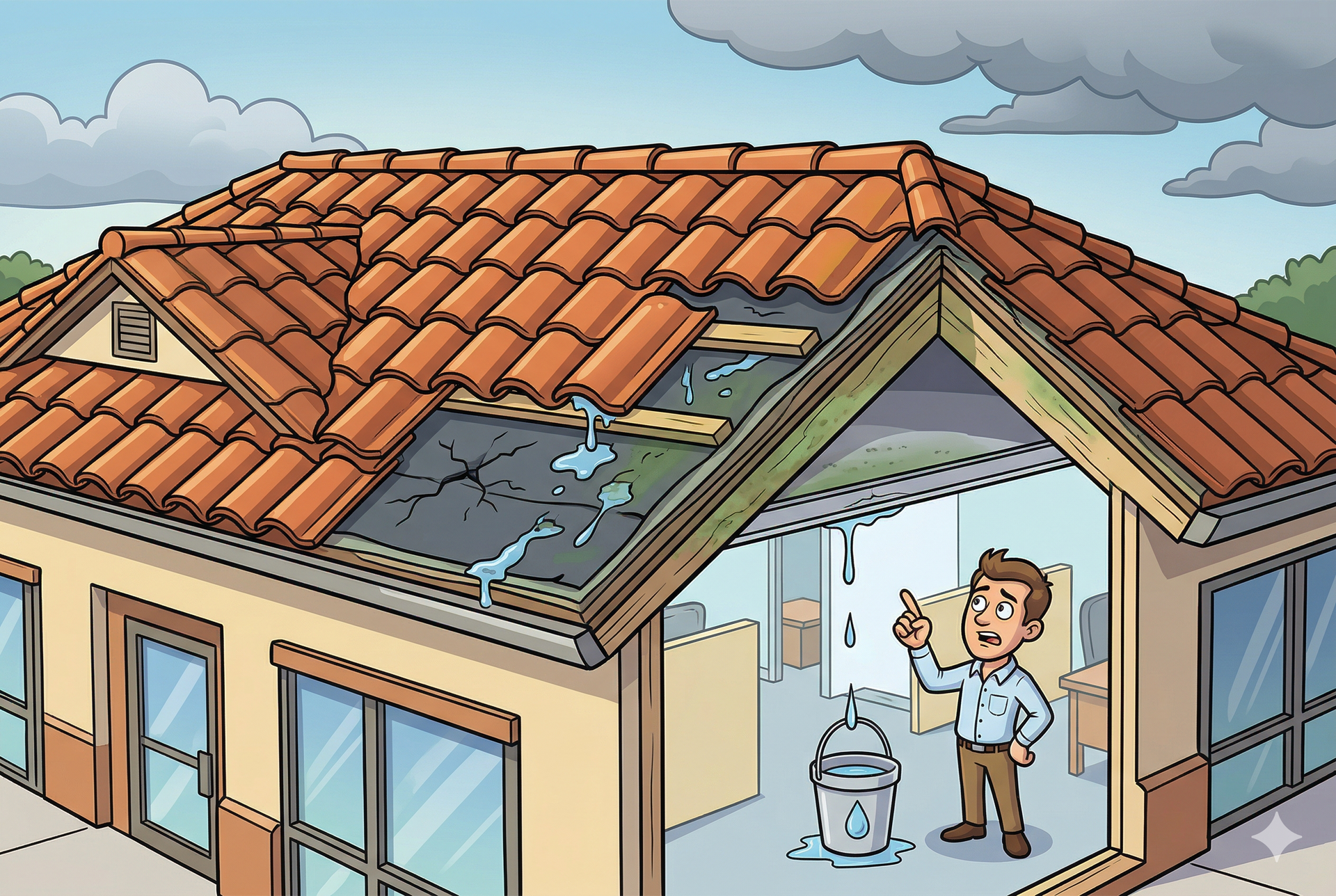
Visible Membrane Damage
Commercial systems like TPO, PVC, and EPDM are durable, but not indestructible.
Look for:
- Tears
- Punctures
- Seam separation
- Lifting edges
Even small openings can allow water to enter quickly during storms.
Sagging or Soft Roof Areas
If part of your roof looks uneven or feels soft, this is a serious warning sign.
This can indicate:
- Water saturation
- Structural weakening
- Decking issues
This is not just a leak risk. It is a potential safety issue.
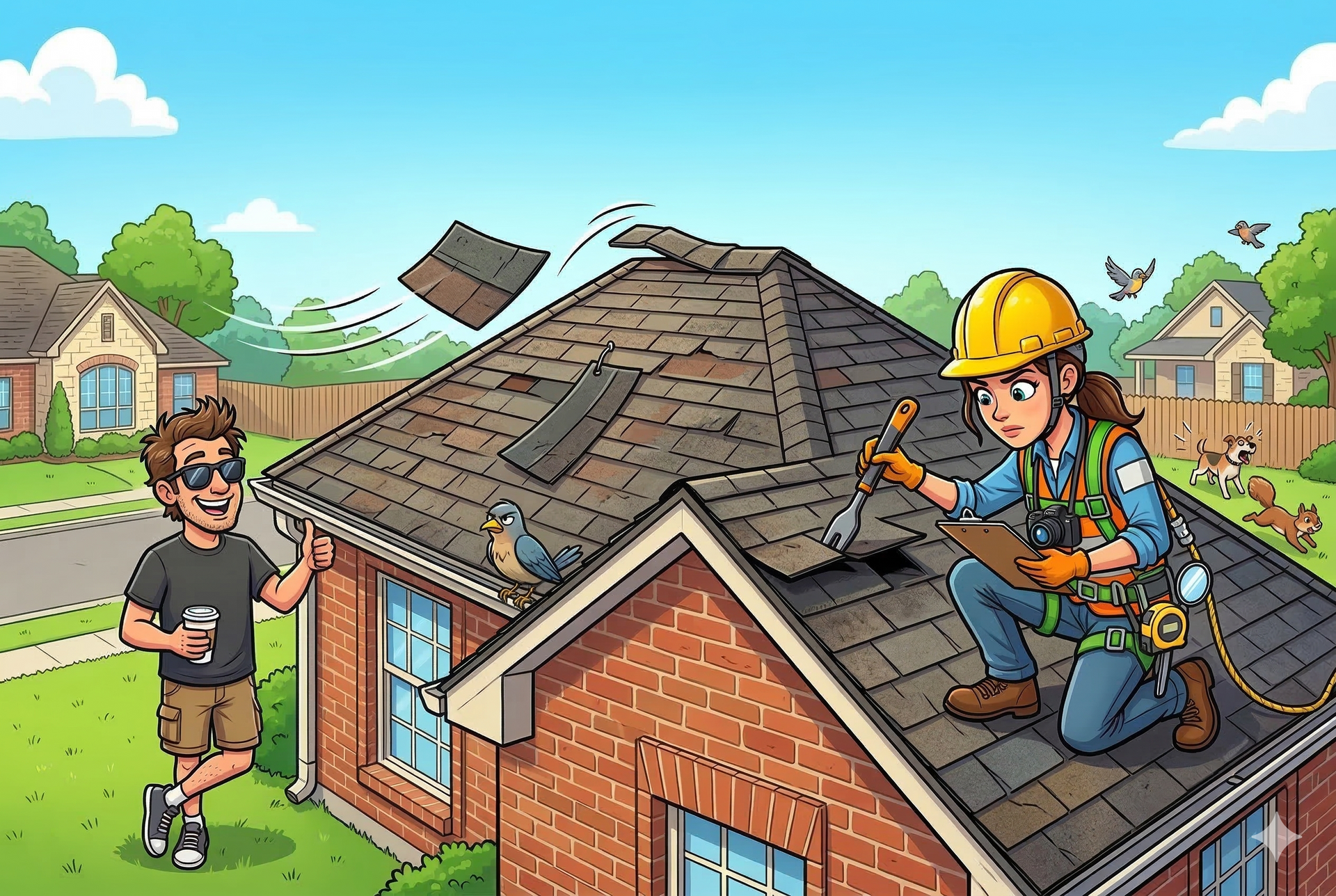
Storm Damage After Wind or Hail
After a North Texas storm, your roof may have damage even if it “looks fine.”
- High winds can lift membranes.
- Hail can puncture or weaken surfaces.
- Debris can create hidden damage points.
If your building was hit by a storm, assume your roof needs inspection.
Sudden Increase in Energy Costs
This one surprises people.
If your energy bills spike suddenly, it may be due to:
- Damaged insulation
- Compromised roofing system
- Air leaks from roof failure
Your roof plays a role in energy efficiency. When it fails, your HVAC system pays the price.
Why Emergency Repairs Matter for Commercial Buildings
In residential properties, a leak is inconvenient.
In commercial properties, it’s a liability.
Leaks can:
- Disrupt business operations
- Damage tenant spaces
- Affect employee safety
- Lead to lost revenue
- Create legal exposure
A roofing problem can quickly become a business problem.
The Cost of Waiting
This is where things escalate.
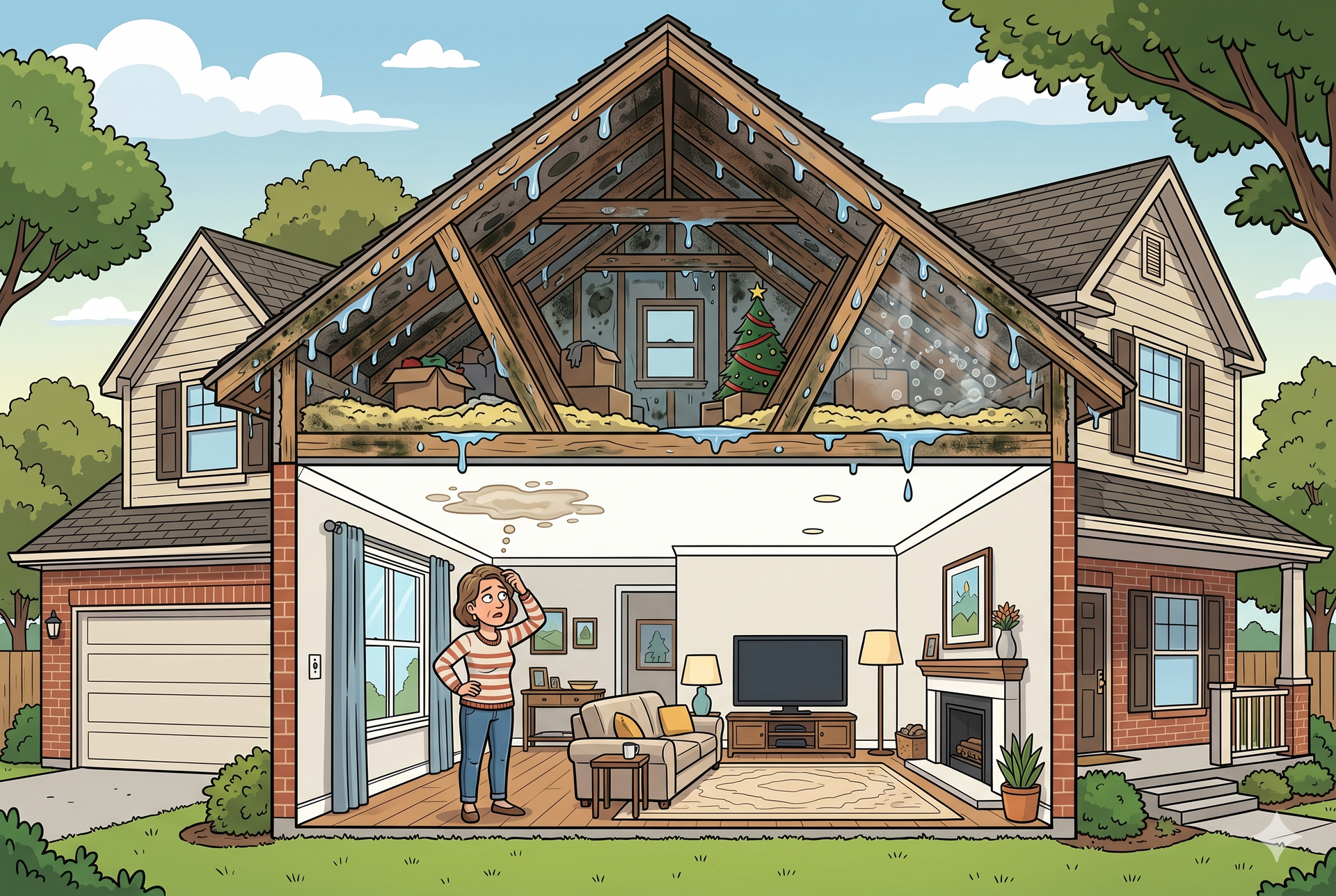
- A small membrane tear becomes a leak.
- The leak spreads across insulation.
- Moisture reaches structural components.
- Repairs become replacements.
Waiting turns a manageable issue into a major expense.
Emergency repairs are about stopping the problem early, not reacting late.
What to Do Immediately
Step 1: Protect the Interior
Move equipment, inventory, or sensitive materials away from affected areas.
Contain water using buckets or protective coverings.
Step 2: Limit Access to Affected Areas
If there is structural concern or active leaking, restrict access for safety.
Step 3: Call a Commercial Roofing Professional
A trained team can assess the situation, stop the damage, and recommend next steps.
Step 4: Document Everything
Take photos of interior and exterior damage. This helps with insurance claims and future planning.
How Renown Roofing Handles Commercial Emergencies
We focus on speed and accuracy.
Our emergency response includes:
- Rapid inspection of the roof system
- Temporary protection such as tarping or sealing
- Full damage assessment
- Detailed documentation for insurance
- Permanent repair planning
We stabilize the situation first, then solve the problem correctly.
Why Flower Mound and DFW Buildings Are More Vulnerable
Commercial roofs in North Texas deal with:
- High winds
- Hailstorms
- Heavy rain
- Extreme heat
These conditions can turn a minor issue into an emergency very quickly.
That’s why response time matters.
Why Commercial Clients Trust Renown Roofing
- Fast response times
- Certified commercial roofing specialists
- Experience with large scale systems
- Advanced inspection tools
- A+ BBB rating
- Over 1,200 five star reviews
We understand the urgency of commercial roofing issues and respond accordingly.
If You’re Unsure, It’s Better to Act
If you’re questioning whether your roof issue is urgent, it probably is.
A quick inspection is far less expensive than delayed damage.
Book an inspection.
Refer a colleague.
Call
972-782-5489 or visit
www.RenownConstruction.comto schedule your free roof inspection today.
Frequently Asked Questions (FAQ)
What is considered a commercial roof emergency
Any situation where water intrusion or structural risk is present.
Should I wait until the storm passes
No. Call immediately. Temporary protection can be installed.
Can small leaks become major issues
Yes. They can spread quickly across large roof systems.
Is it safe to walk on a damaged commercial roof
No. It can be unstable and dangerous.
How fast can emergency repairs be done
Temporary solutions can often be applied quickly.
Does insurance cover commercial roof emergencies
Often yes, depending on the cause and documentation.
What is the most common emergency issue
Leaks following storms are the most common.
How often should commercial roofs be inspected
At least twice a year and after major storms.
Can ponding water cause emergencies
Yes. It can lead to leaks and structural stress.
What is the first step after noticing a problem
Protect the interior and contact a professional roofing contractor immediately.